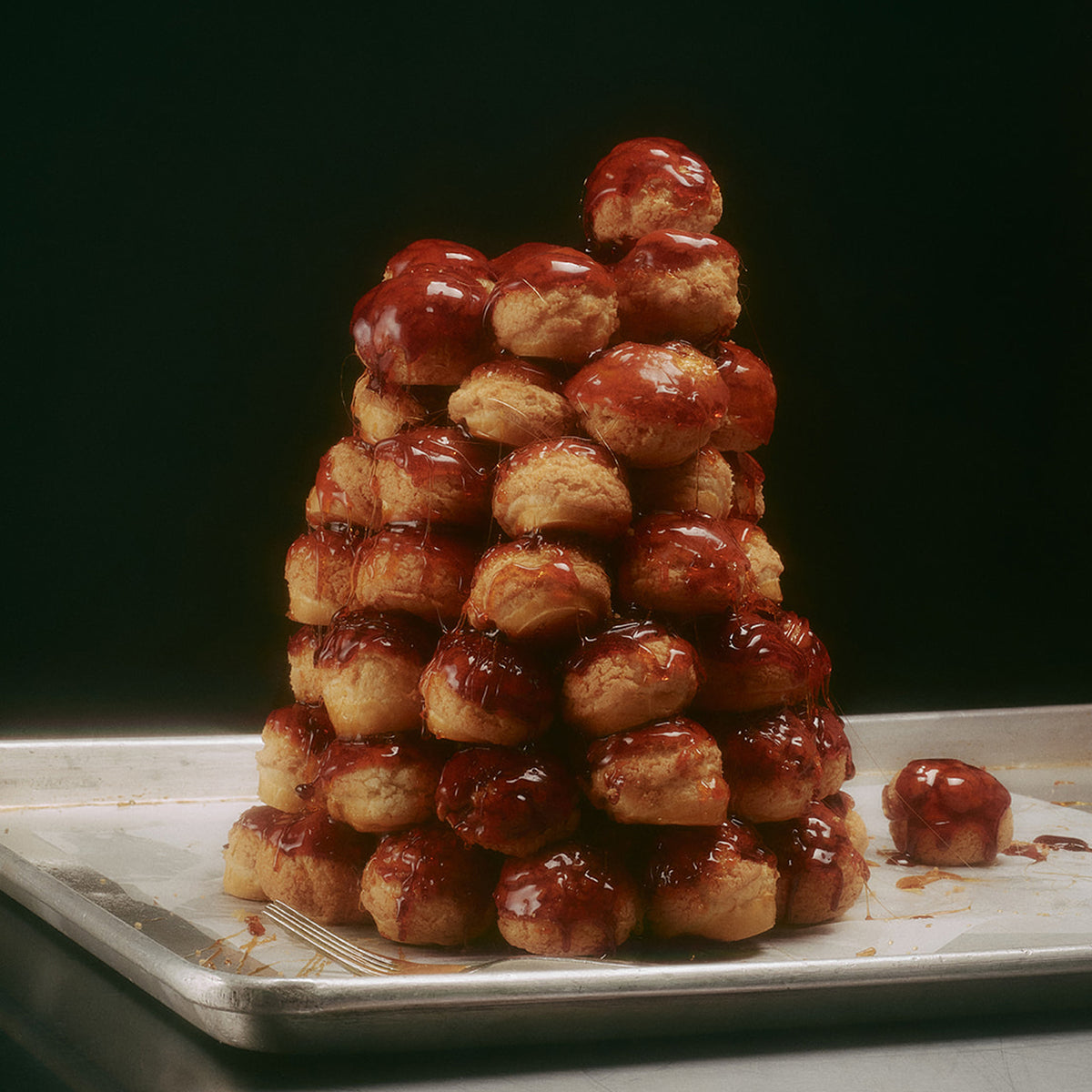
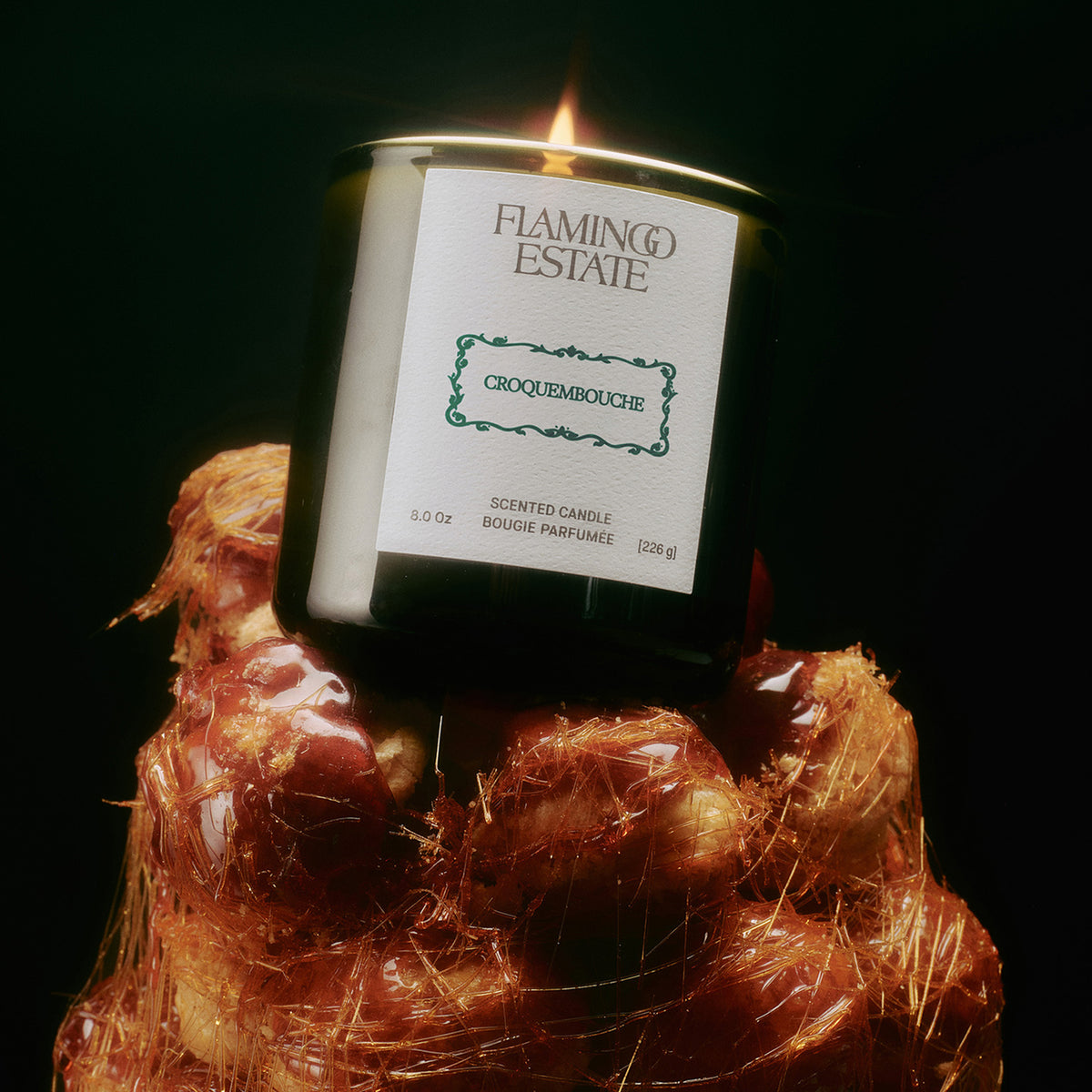
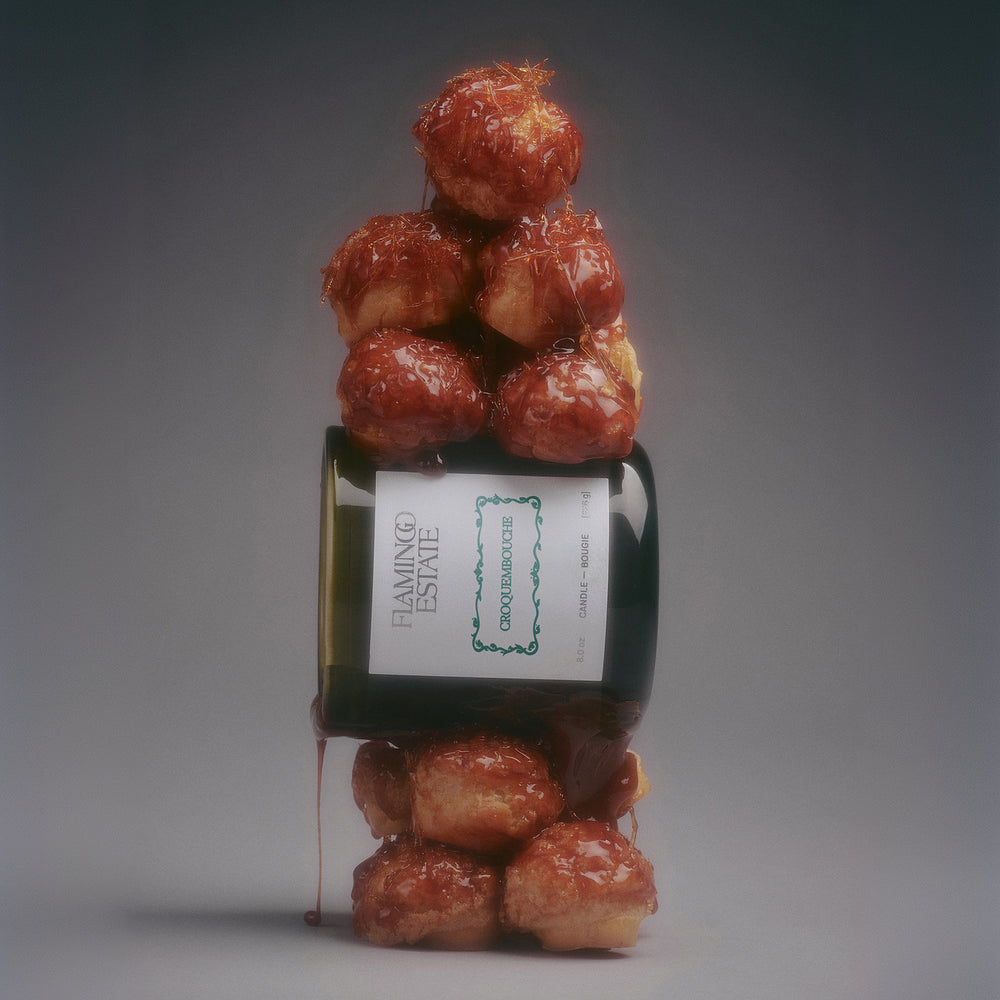
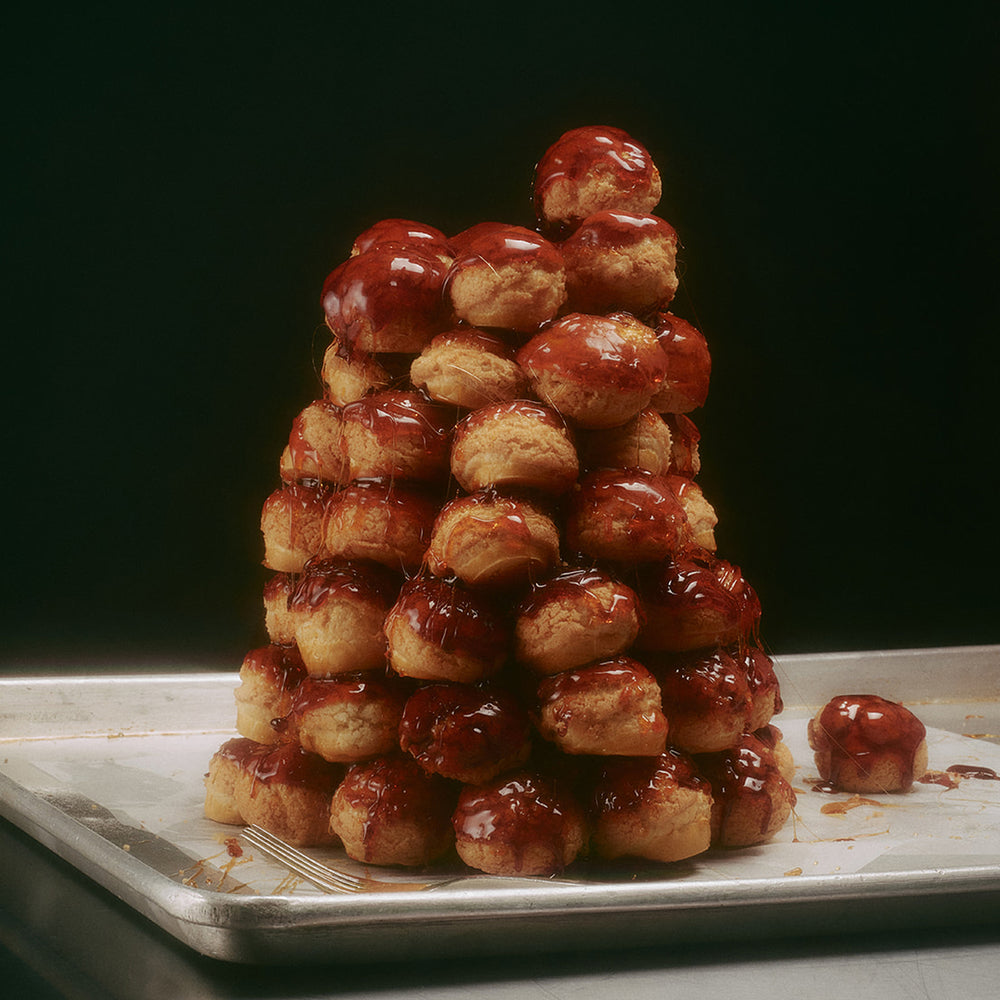


Croquembouche, French for "crunch in the mouth," is believed to date back to the early 19th century. It’s credited to the French pastry chef Marie-Antoine Carême, one of the founding figures of haute cuisine and grand culinary presentation.
Carême was known for elaborate, sculptural desserts inspired by architecture. He trained as an architect before turning to pastry, and his desserts often resembled temples, ruins, and monuments made of sugar, marzipan, and pastry.
The croquembouche fits into this tradition: a dramatic, edible centerpiece rather than just a dessert that, to this day, continues to be the traditional wedding cake in France (making guest appearances at baptisms and other major celebrations).
The tower shape is sometimes seen as symbolizing the building of a life together. Like any great partnership, it’s not meant to be perfect: sometimes a little wobbly, burnt, with a great deal of patience and hard work holding it together. But at its foundation, it is always sweet.